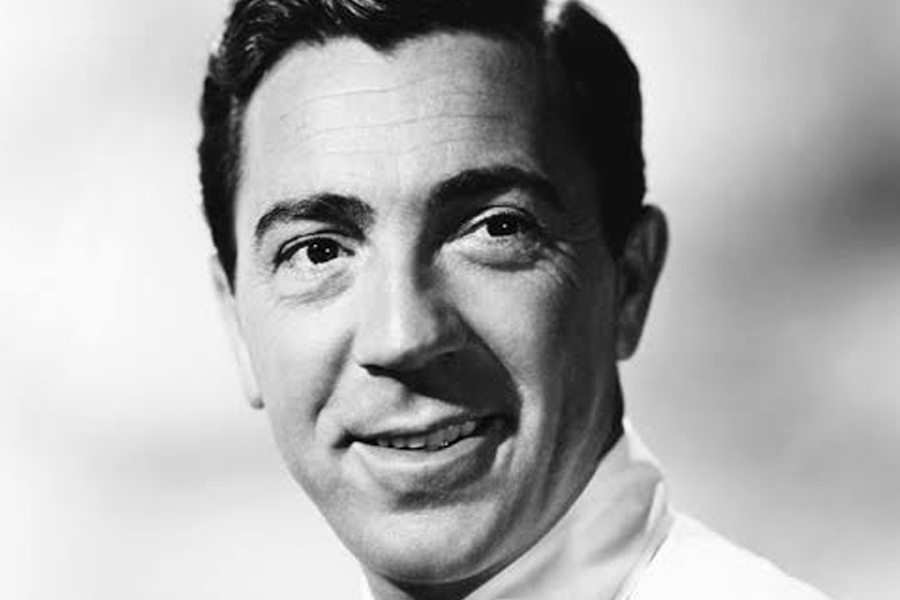
Basic Information
| Detail | Information |
|---|---|
| Full Name | Thomas J. D’Andrea |
| Known As | Tom D’Andrea, Tom D Andrea |
| Born | May 15, 1909 |
| Birthplace | Chicago, Illinois, USA |
| Died | May 14, 1998 |
| Age at Death | 88 |
| Occupations | Actor, writer, comedian, publicist |
| Nationality | American |
| Heritage | Irish and Italian |
| Spouse | Helen Pender |
| Marriage | January 21, 1948 |
| Children | Thomas M. D’Andrea, Jim D’Andrea, Mick D’Andrea |
| Best Known For | Jim Gillis on The Life of Riley |
| Major Studio | Warner Bros. |
| Final Feature Film | A House Is Not a Home, 1964 |
| Later Home | Thousand Oaks, California and Port Charlotte, Florida |
The Chicago Beginnings of Tom D Andrea
When I look at Tom D’Andrea’s life, I see a classic Hollywood story that almost seems designed for a black and white movie. He was born in Chicago on May 15, 1909, into an Irish and Italian family, and long before he became a familiar face on television, he was simply a bright young man with a talent for words, sports, and conversation.
D’Andrea graduated from high school with honors and was an accomplished basketball player. His early working life included a position at the Chicago Public Library and later publicity work at the Sherman Hotel in Chicago’s Loop. The hotel was surrounded by musicians, entertainers, and performers, giving him an unexpected education in show business.
Those connections eventually pointed him west.
In 1934, D’Andrea moved to Hollywood and began working as a publicist. His clients included major names such as Betty Grable, Gene Autry, Mae Clarke, and Jackie Coogan. At first, he was the man behind the publicity rather than the man in front of the camera. But Hollywood has a habit of moving people toward the spotlight, especially when they already know how to make an audience laugh.
From Publicity to Radio Comedy
By approximately 1936 or 1937, D’Andrea became increasingly interested in radio writing. He joined forces with comedy writer Wilkie Mahoney and began creating material for popular performers and programs.
His early radio work included contributions associated with Ben Bernie, Jack Benny, Eddie Cantor, Olsen and Johnson, Wrigley programs, and Texaco Star Theatre. The work was largely built around gags, sketches, punch lines, and performance material rather than long dramatic scripts.
I find this stage especially important because it explains the rhythm that later became so natural in D’Andrea’s acting. Radio comedy demanded timing. A line had to land quickly, clearly, and often without the benefit of a visual expression. D’Andrea learned to make words do the heavy lifting.
He also performed. His writing partnership with Mahoney eventually developed into a comedy act, giving D’Andrea practical experience as both the person creating the joke and the person delivering it.
That combination would become one of his greatest professional advantages.
World War II and the Breakthrough That Changed Everything
D’Andrea entered the U.S. Army Air Corps during World War II and was stationed at Camp Roberts in California. Rather than leaving his entertainment abilities behind, he put them to work.
He wrote and performed for military radio programs and became involved with a variety of wartime entertainment activities. One memorable assignment involved British singer and comedian Gracie Fields. D’Andrea initially wrote material for her, but during rehearsal his own reading of the lines impressed Fields enough that he ended up performing as well.
That moment captured something essential about him. He was not simply a writer who wanted to remain behind the curtain. He could step into the performance and hold his own.
In 1943, his military entertainment work led to an extraordinary opportunity. A comic monologue he performed at Ciro’s on the Sunset Strip attracted the attention of a Warner Bros. executive. D’Andrea subsequently appeared in This Is the Army, the Irving Berlin musical comedy featuring Ronald Reagan.
He also contributed dialogue.
Of roughly 450 servicemen involved with the production, D’Andrea was reportedly the only one to receive a studio contract. Warner Bros. eventually signed him to a long-term deal around 1945 or 1946.
The former Chicago publicity man had officially become a Hollywood actor.
Tom D Andrea and His Warner Bros Film Career
During his peak film years, D’Andrea appeared in approximately 35 movies. He was rarely the leading man, but that was never really the point. His strength was character work. He could enter a scene, establish a personality within seconds, deliver a sharp line, and leave an impression.
His filmography included Pride of the Marines with John Garfield, Night and Day with Cary Grant, Never Say Goodbye and Silver River with Errol Flynn, Humoresque, Dark Passage with Humphrey Bogart, Flaxy Martin, Tension, and Kill the Umpire with William Bendix.
One of his favorite roles was Sam the cabdriver in Dark Passage. Working opposite Bogart gave D’Andrea another opportunity to demonstrate the understated, streetwise style that suited him so well.
His career also benefited from his friendships and relationships within the entertainment world. He met actress and fashion model Helen Pender while working around Night and Day, and the two eventually married.
Tom D Andrea and Helen Pender
Born on December 21, 1917, Helen Pender was an actress and fashion model. Arabian Nights, Mildred Pierce, Nite and Day, and Never Say Goodbye were among the films in which she made brief, uncredited appearances.
On January 21, 1948, Tom D’Andrea and Helen Pender tied the knot.
Helen is one of the most enduring characters in D’Andrea’s personal life, having been married for almost fifty years. Helen had a more subdued public persona while D’Andrea gained recognition for his work in movies and television.
Up to Tom’s passing in 1998, the pair stayed wed. After nearly nine years of survival, Helen passed away on February 28, 2007, from heart failure.
From the studio era to the golden age of television and into the final decades of their lives, their partnership covered the shifting terrain of Hollywood.
Jim Gillis and The Life of Riley
For many viewers, Tom D’Andrea will always be Jim Gillis.
From 1953 through 1958 and into the show’s later period, D’Andrea played Jim Gillis on The Life of Riley opposite William Bendix. Jim was the sarcastic neighbor, a character who could puncture the chaos of Riley’s world with a perfectly timed remark.
This role brought D’Andrea a different kind of fame. Movies had made him a dependable supporting player, but television allowed audiences to see him repeatedly. Week after week, his face became familiar.
His chemistry with Bendix was particularly important. Their comic relationship gave the series an easy rhythm, like two musicians who already know where the other one is going.
D’Andrea continued working in television beyond The Life of Riley. His credits included appearances on Death Valley Days, The Andy Griffith Show, The Beverly Hillbillies, Green Acres, That Girl, and The Dick Van Dyke Show.
He also appeared in The Soldiers in 1955, a military comedy in which he acted, wrote, and produced episodes.
Stand Up Comedy and Life Beyond the Screen
D’Andrea never completely abandoned his roots in live comedy.
He performed stand up and appeared at venues including the Sands in Las Vegas, where he shared the entertainment circuit with Frank Sinatra. He was also active in organizations and clubs connected to Hollywood’s entertainment community, including the Friars Club and Masquers Club.
His career was therefore broader than his filmography suggests. He was a publicist, radio writer, performer, military entertainer, screen actor, television actor, producer, and comedian.
That versatility was the thread running through his life.
His final feature film was A House Is Not a Home in 1964, but retirement did not mean disappearing. He remained socially active and continued participating in comedy circles and occasional performances.
Tom D Andrea Children and Family
Tom D’Andrea’s family extended his story into several very different worlds.
His son Thomas M. D’Andrea, born October 30, 1930, became a distinguished U.S. Marine Corps colonel and fighter pilot. Unlike his father, whose battlefield was Hollywood, Thomas M. D’Andrea served in actual combat.
He entered Naval flight training in 1952 and flew F-86 Sabres and A-4 Skyhawks. His military career included service in Korea and two tours in Vietnam. He completed more than 100 combat missions and received decorations including the Distinguished Flying Cross, Legion of Merit, Bronze Star with Combat V, Air Medals, and Meritorious Service Medals.
After retiring in 1980, he settled in Punta Gorda, Florida. He remained active in civic affairs and became involved with the Marine Corps Aviation Museum at Quantico. He died on April 5, 2023, at the age of 92.
Another son, Jim D’Andrea, was known in family accounts as Jim, James, Jimmy, or Bobby. He lived in Florida for portions of his life and was the father of grandchildren including Justin and Allison, with some family accounts also mentioning April.
The youngest son, Mick or Michael D’Andrea, followed a path closer to the entertainment business. Born May 13, 1952, he worked in film sound and received credits on productions including Masters of the Universe, Monkey Shines, Ghostbusters II, and Noises Off. He died of cancer in 1996, approximately two years before his father.
The family also included grandchildren and later generations, including Rick D’Andrea, Elizabeth D’Andrea-Schusterman, April, Justin, Allison, and others. Great-grandchildren mentioned in family accounts include Sarah Hipp and Anabella D’Andrea.
Tom D Andrea Later Years in California and Florida
For more than 30 years, D’Andrea lived in Thousand Oaks, California. Even after his major Hollywood years had passed, he reportedly maintained a remarkably active social life.
Family descriptions portray him as a storyteller who enjoyed restaurants, conversation, comedy, and companionship. Daily brunch and dinner outings became part of his routine. He was the kind of person whose memories could turn an ordinary meal into a miniature Hollywood history lesson.
In April 1997, at age 87, D’Andrea moved to South Port Square in Port Charlotte, Florida, to be closer to family.
His health was declining, and he had experienced heart problems. After a fall and while under hospice care, he died on May 14, 1998, just one day before his 89th birthday.
His family chose a ceremony at sea for his final farewell.
Tom D Andrea Career and Financial Picture
D’Andrea’s professional journey stretched across more than six decades, although his most visible work concentrated in the 1940s and 1950s.
| Period | Career Milestone |
|---|---|
| 1934 | Arrived in Hollywood as a publicist |
| 1937 | Entered radio writing and comedy |
| 1941 to 1945 | Served in the Army Air Corps |
| 1943 | Appeared in This Is the Army |
| 1945 to 1952 | Major Warner Bros. film period |
| 1947 | Appeared in Dark Passage |
| 1950 | Appeared in Kill the Umpire |
| 1953 to 1958/59 | Played Jim Gillis on The Life of Riley |
| 1955 | Worked on The Soldiers |
| 1964 | Appeared in A House Is Not a Home |
| 1997 | Moved to Florida |
| 1998 | Died at age 88 |
There is no reliable public record establishing a specific net worth, estate value, or major fortune. His lifestyle appears to have reflected the comfortable circumstances of a successful working Hollywood professional rather than extraordinary wealth.
His long residence in Thousand Oaks and later move to a Florida retirement community suggest financial stability, while his extensive career provided a steady professional foundation across film, television, radio, and live entertainment.
The Lasting Personality of Tom D Andrea
I find D’Andrea fascinating since his career was never predictable.
He started out in PR before transitioning into radio writing, becoming a military performer, breaking into Hollywood with a wartime musical, developing a film career, becoming a regular on television, and continuing to act long after his most prominent appearances on films were over.
His ability to adapt was his true gift.
He was aware of character, timing, audiences, and words. The same trait followed him whether he was creating a radio comedy in the 1930s, entertaining soldiers during World War II, operating a taxi in Dark Passage, cracking jokes with William Bendix, or sharing tales over dinner in his senior years.
Even tho Tom D’Andrea passed away in 1998, his career offers a glimpse into a time when entertainers in Hollywood could smoothly transition between live comedy, radio, film, television, and nightclubs. Even tho his name wasn’t listed above the title, he contributed to the unforgettable characters that brought vintage American entertainment to life on television.
FAQ
Who was Tom D Andrea?
Tom D’Andrea was an American character actor, radio writer, comedian, and publicist best known for playing Jim Gillis on The Life of Riley and for supporting roles in Warner Bros. films.
When was Tom D Andrea born?
Tom D’Andrea was born on May 15, 1909, in Chicago, Illinois.
What was Tom D Andrea famous for?
He was especially recognized for playing Jim Gillis on The Life of Riley and for supporting performances in films such as Dark Passage, Pride of the Marines, Night and Day, and Kill the Umpire.
Did Tom D Andrea write radio scripts?
Yes. Beginning around 1937, he wrote comedy material associated with performers and programs including Jack Benny, Eddie Cantor, Ben Bernie, Olsen and Johnson, Wrigley programs, and Texaco Star Theatre.
Who was Tom D Andrea’s wife?
Tom D’Andrea married actress and fashion model Helen Pender on January 21, 1948. They remained married until his death in 1998.
How many children did Tom D Andrea have?
Family accounts identify three sons: Thomas M. D’Andrea, Jim D’Andrea, and Mick D’Andrea, although historical records sometimes vary in how they describe the family relationships.
Who was Thomas M D Andrea?
Thomas M. D’Andrea was Tom D’Andrea’s son and a retired U.S. Marine Corps colonel and fighter pilot who served in Korea and Vietnam and completed more than 100 combat missions.
When did Tom D Andrea die?
Tom D’Andrea died on May 14, 1998, at South Port Square in Florida, one day before his 89th birthday.
How old was Tom D Andrea when he died?
He was 88 years old when he died in 1998.
What was Tom D Andrea’s final movie?
His final feature film was A House Is Not a Home, released in 1964 and featuring Shelley Winters.
Where did Tom D Andrea live later in life?
He lived in Thousand Oaks, California, for more than 30 years before moving to South Port Square in Port Charlotte, Florida, in April 1997 to be closer to family.
What happened to Helen Pender after Tom D Andrea died?
Helen Pender survived her husband by nearly nine years. She died on February 28, 2007, after heart failure in the Florida area.
When did Tom D Andrea’s son Mick die?
Mick D’Andrea died in 1996 after working in film sound. His credits included Ghostbusters II, Masters of the Universe, Monkey Shines, and Noises Off.