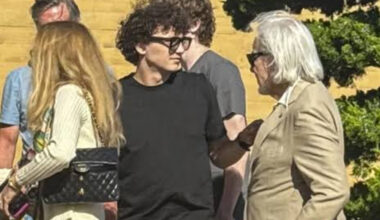
Ivan Lipkies, often credited by his full name Alejandro Ivan Lipkies Velasco, is a Mexican filmmaker whose career has been shaped by cinema, family, and cultural tradition. Born on November 17, 1963, in Mexico City, he grew up inside a remarkable entertainment dynasty headed by his mother, María Elena Velasco, better known as La India María, and his father, Julián de Meriche.
Rather than simply inheriting a famous surname, Lipkies built a career across directing, producing, writing, editing, acting, and teaching. His most celebrated achievement is Huapango, the 2004 drama that transformed Shakespeare’s Othello into a story rooted in Mexican dance, regional identity, jealousy, and machismo.
I find Lipkies’s career especially interesting because his filmography functions almost like a family album. His parents, sister, partner, and son have all intersected with his professional life, creating several generations of artistic collaboration.
Ivan Lipkies Basic Information
| Category | Details |
|---|---|
| Full name | Alejandro Ivan Lipkies Velasco |
| Known professionally as | Ivan Lipkies |
| Date of birth | November 17, 1963 |
| Birthplace | Mexico City, Mexico |
| Nationality | Mexican |
| Professions | Director, producer, actor, writer, editor |
| Education | Universidad Iberoamericana; London International Film School |
| Major film | Huapango |
| Mother | María Elena Velasco, La India María |
| Father | Julián de Meriche |
| Sister | Ivette Eugenia Lipkies, also known as Goretti Lipkies |
| Partner | Rossana Barro |
| Son | Ivan Lipkies Barro |
| Production company | Vlady Realizadores |
Growing Up in the World of La India María
Ivan was raised in a filmmaking family. His mother, María Elena Velasco, is famous for her humorous portrayal of La India María in Mexican popular culture.
Velasco amused and observed society. Her character battled racism, class differences, corruption, bureaucracy, and daily absurdities. She played La India María in around 16 films and starred in the 1998 TV series ¡Ay María qué puntería!
Julián de Meriche (Vladimir Lipkies Chazan) was Ivan’s father Born in Russia and settled in Mexico, de Meriche was an actor, dancer, choreographer, and sometimes director. He worked in European, Argentine, Mexican, and dubbing. Over 180 films featured him.
Ivan was young when his parents married in 1965. After his father’s death in 1974, María Elena Velasco took up the family’s creative and professional pursuits
Early cinema exposure was unusually direct for Ivan. He appeared as a child in 1970s films alongside his mother, such as Tonta tonta and pero no tanto. Cameras, scripts, costumes, production crews, and actors were part of family life.
His Sister Ivette Goretti Lipkies
Ivan’s sister Ivette Eugenia Lipkies, professionally associated with the name Goretti Lipkies, also became an important part of the family filmmaking tradition.
Goretti has worked as an actress, screenwriter, producer, and occasional director. Her writing and production credits include projects such as Ni Chana ni Juana, Ni de aquí ni de allá, Huapango, and La hija de Moctezuma.
The exact number of siblings is occasionally reported differently, with some references mentioning a third daughter or using María Goretti as a separate name. However, the more consistent accounts identify Ivette or Goretti as the principal sibling connected to Ivan’s professional filmography.
The siblings’ collaboration illustrates how the Lipkies family treated cinema as a collective craft. Instead of keeping professional and family worlds completely separate, they often worked together behind and in front of the camera.
Education Before Becoming a Director
Despite growing up around movies, Ivan did not immediately limit himself to film studies.
He studied psychology at Universidad Iberoamericana, approximately from 1982 to 1987. That background adds an interesting dimension to his later work because many of his films are driven by relationships, emotional conflict, jealousy, and human behavior.
He subsequently pursued filmmaking more directly. He trained in cinematography through a Kodak workshop at the Centro de Capacitación Cinematográfica and studied acting and direction with respected teacher Ludwig Margules.
His education continued in Britain at the London International Film School. Around 1990, he completed his filmmaking studies there and made the short film Etiquette.
His route into filmmaking therefore combined psychology, practical production experience, cinematography, directing, and international film education.
From Production Assistant to Director
Ivan’s early career involved learning virtually every practical layer of production. He worked as a general assistant, assistant director, production manager, and executive producer on projects associated with his mother.
Among the productions connected to this period were El coyote emplumado, Ni Chana ni Juana, Ni de aquí ni de allá, Se equivocó la cigüeña, and Sobrenatural.
His feature directing debut came with By Our Own Correspondent, also known as El corresponsal, in 1993. The Mexico and United Kingdom production dealt with a historical incident connected to Pancho Villa and featured actors including Claudio Brook and Alonso Echánove.
He later directed Las delicias del poder, a political satire written by and starring María Elena Velasco, and directed numerous episodes of ¡Ay María qué puntería!.
These projects gradually moved him from the role of the filmmaker working behind a famous performer to an established director with his own artistic identity.
Huapango and His Most Celebrated Achievement
The defining work of Ivan Lipkies’s career is Huapango, released in 2004.
The film takes Shakespeare’s Othello and moves its central tragedy into the Huasteca region of Mexico. At its center are Otilio, played by Alejandro Tommasi, Julia, played by Lisset, and Santiago, played by Manuel Landeta.
Julia is an accomplished huapango dancer. Santiago is her longtime dance partner and secretly loves her. When Julia chooses to marry Otilio, Santiago’s jealousy begins to grow.
From there, the familiar architecture of Othello emerges through Mexican cultural forms. Suspicion replaces trust. Rumor becomes a weapon. Intimacy becomes evidence. Jealousy gradually turns into destruction.
What makes Huapango distinctive is that dance is not merely decorative. The dance itself becomes part of the storytelling.
Dance as Desire and Conflict in Huapango
Huapango is a traditional music and dance culture associated with the broader Huasteca region, including parts of Tamaulipas, Veracruz, Hidalgo, and San Luis Potosí.
The music commonly features violin, huapanguera, and jarana huasteca. Performers use vigorous zapateado footwork on a wooden platform called a tarima, while singers use distinctive falsetto techniques and traditional or improvised verses.
The dance can also carry the language of courtship. Partners communicate through movement, rhythm, posture, and distance.
Lipkies turns that physical vocabulary into a cinematic metaphor.
Julia and Santiago’s dancing expresses a relationship that is emotionally charged even when no explicit romantic declaration is made. Their physical coordination becomes something that Santiago can manipulate against Julia and Otilio.
The tarima becomes almost like a stage within the stage. Feet strike wood with tremendous energy while the characters’ private emotions become increasingly dangerous.
Reimagining Shakespeare Through Mexican Culture
Lipkies’s adaptation does not simply transfer Othello from Venice to Mexico. It changes what the tragedy emphasizes.
Race, which is central to Shakespeare’s original play, becomes far less important. Otilio is not portrayed primarily as an outsider because of race. Instead, the film concentrates on jealousy, masculinity, marriage, social expectations, and violence.
Machismo consequently becomes one of the film’s central concerns.
Otilio’s injury also changes the balance of power. His physical vulnerability gives Santiago an opportunity to exploit uncertainty and insecurity. The result is a tragedy driven less by military hierarchy and more by intimate relationships.
The film’s melodramatic structure connects it with traditions of Mexican cinema, while its dance sequences preserve a strong sense of regional identity.
Awards and Recognition for Huapango
Huapango was popular in Mexican movies.
It won the Ariel Award for Best Adapted Screenplay. This film won several Diosas de Platas, including Best Picture and Best Director.
Not everyone liked it. Some Mexican filmgoers liked its performances, musical sequences, cultural specificity, and dance traditions, while others disliked its melodramatic and folkloric aspects.
Gender, mobility, cultural identity, and adaptation have dominated academic interpretations of the picture. Huapango is valuable as more than a Shakespeare rendition.
La Hija de Moctezuma and His Mother’s Final Film
In 2014, Ivan directed La hija de Moctezuma, an adventure comedy featuring María Elena Velasco in her final film appearance as La India María.
The project again brought the family together. Ivan directed and worked on the production, while his sister Goretti was involved in the writing.
The film occupies a poignant place in the family’s history because Velasco died the following year, on May 1, 2015, after battling stomach cancer.
Her death marked the end of one of the most recognizable careers in Mexican comedy, but Ivan continued working with the artistic legacy she had created.
Rossana Barro and Their Son
Ivan’s personal and professional life also includes actress Rossana Barro, with whom he has shared a long-term relationship.
Barro has occasionally discussed their relationship publicly, including references to their decades together. She is also the mother of Ivan’s son.
Their son, Ivan Lipkies Barro, was born in Mexico City on November 17, 2003, exactly four decades after his father.
The younger Ivan has followed the family tradition into entertainment. He has worked as an actor, director, writer, and editor, appearing in productions including La hija de Moctezuma and Ella es Ramona.
In 2025, he appeared in Autos, mota y rocanrol, portraying a young Luis de Llano. He has also worked on short films including La gaviota and Revelado.
His involvement suggests that the Lipkies filmmaking story is continuing into another generation.
The Velasco Family Roots
Ivan’s maternal grandparents were Tomás Velasco Saavedra and María Elena Fragoso Peón.
Tomás reportedly worked as a railway mechanic and died around 1950. Following his death, the family moved from Puebla to Mexico City.
Ivan’s maternal relatives included Gloria, Tomás, and Susana Velasco. These family roots provide another layer to the story because María Elena Velasco’s later career transformed a relatively ordinary family background into one of the most recognizable names in Mexican entertainment.
The production company Vlady Realizadores also reflects the family’s history. The name references Vladimir, the birth name of Ivan’s father, Julián de Meriche.
Acting, Teaching, and Other Work
Directing has remained at the center of Ivan’s career, but he has never been restricted to one role.
He has acted in productions including Porfirio Díaz, 100 años sin patria, Cuando los hijos regresan, Lotería del crimen, and 1938. His earliest appearances came during childhood, when he performed in projects associated with his mother.
He has also taught film. From 2017 to 2019, he taught at Universidad de la Comunicación, following earlier teaching work at Universidad Anáhuac.
Another unusual credit came through the Mexico production unit of the James Bond film Spectre in 2015, where he worked as an extras coordinator.
His recent work has included filmmaking and production on short-form projects, including Amor chiquito and La gaviota.
A Family Business Built Around Cinema
One of the most distinctive features of Ivan Lipkies’s biography is the degree to which filmmaking has remained a family enterprise.
His mother was the performer and creator whose character became a cultural institution. His father brought European and international performance experience into Mexican cinema. His sister became a writer and producer. His partner is an actress. His son has entered the same creative world.
For Ivan, filmmaking therefore seems less like a single career decision and more like a river running through generations.
At the same time, he has developed interests that distinguish him from his parents. His psychology studies, London training, teaching career, Shakespeare adaptation, and work with younger filmmakers show a broader professional identity.
Ivan Lipkies and His Mother’s Legacy
After María Elena Velasco’s death in 2015, Ivan became one of the people connected to preserving and interpreting her cinematic legacy.
He and other members of the family have participated in retrospectives and conversations about La India María. In 2025, Ivan appeared at a Cineteca Nacional discussion following a screening of La hija de Moctezuma, alongside family members including Goretti and his son.
These appearances are significant because they place the family story within a wider history of Mexican popular cinema.
Rather than presenting La India María only as a nostalgic comedy figure, discussions around her work can also examine class, indigenous representation, gender, social inequality, and the complicated ways popular entertainment reflects Mexican society.
Personal Life and Financial Profile
Ivan has kept his personal life private.
No public figures have publicly disclosed their net worth. Instead, his career includes directing, production, acting, editing, teaching, and family films.
His work with Vlady Realizadores has given the family creative influence over various projects. Thus, the public image is that of a working filmmaker rather than a celebrity whose wealth or lifestyle define him.
Recent Work and the Next Generation
The Lipkies family remains active in Mexican entertainment.
Ivan’s own recent projects include short-film work and production activities, while his son has begun building a separate screen career. The younger Ivan’s presence on social media and YouTube also reflects how the family’s relationship with audiences is changing.
The older generation built its audience through theatrical films and television. The newer generation can combine cinema with online video, social media, short films, and digital comedy.
That transition gives the family’s story a modern dimension without severing its connection to the past.
Frequently Asked Questions
Who is Ivan Lipkies?
Ivan Lipkies is a Mexican film director, producer, actor, writer, and editor born on November 17, 1963, in Mexico City. He is particularly known for directing Huapango and for his long association with films featuring his mother, María Elena Velasco.
Who was Ivan Lipkies’s mother?
His mother was María Elena Velasco, the celebrated Mexican actress and comedian known professionally as La India María. She created one of Mexican popular culture’s most enduring comic characters.
Who was Ivan Lipkies’s father?
His father was Julián de Meriche, born Vladimir Lipkies Chazan. He was a Russian-born Mexican actor, dancer, choreographer, and occasional director who appeared in more than 180 films during his career.
Does Ivan Lipkies have siblings?
His best-documented sibling is Ivette Eugenia Lipkies, also known professionally as Goretti Lipkies. She has worked as an actress, writer, producer, and occasional director and collaborated with Ivan on several projects.
Who is Ivan Lipkies’s partner?
Ivan has a long-term relationship with actress Rossana Barro. The couple have been together for decades and have a son, Ivan Lipkies Barro.
Who is Ivan Lipkies’s son?
Ivan Lipkies Barro was born on November 17, 2003, in Mexico City. He is an actor and filmmaker who has worked in acting, directing, writing, and editing.
What is Ivan Lipkies best known for?
He is best known for directing Huapango, a 2004 Mexican drama inspired by Shakespeare’s Othello. He is also closely associated with the film career and legacy of his mother, La India María.
What is Huapango about?
Huapango tells a tragic story of love and jealousy involving Otilio, Julia, and Santiago. Its narrative adapts major elements of Othello while placing the action within the culture of huapango dance in Mexico’s Huasteca region.
What makes Huapango different from Othello?
The film moves the story away from Shakespeare’s racial and military context and places greater emphasis on Mexican regional culture, machismo, gender relations, dance, jealousy, and domestic violence.
Did Huapango win awards?
Yes. The film received the Ariel Award for Best Adapted Screenplay and several Diosas de Plata honors, including recognition for Best Picture and Best Director.
What was María Elena Velasco’s final film?
Her final film appearance as La India María was in La hija de Moctezuma, directed by her son Ivan Lipkies and released in 2014.
Does Ivan Lipkies still work in film?
Yes. His later career has included directing, producing, editing, acting, teaching, and involvement in short-film projects. He has also continued participating in events connected with his family’s cinematic legacy.