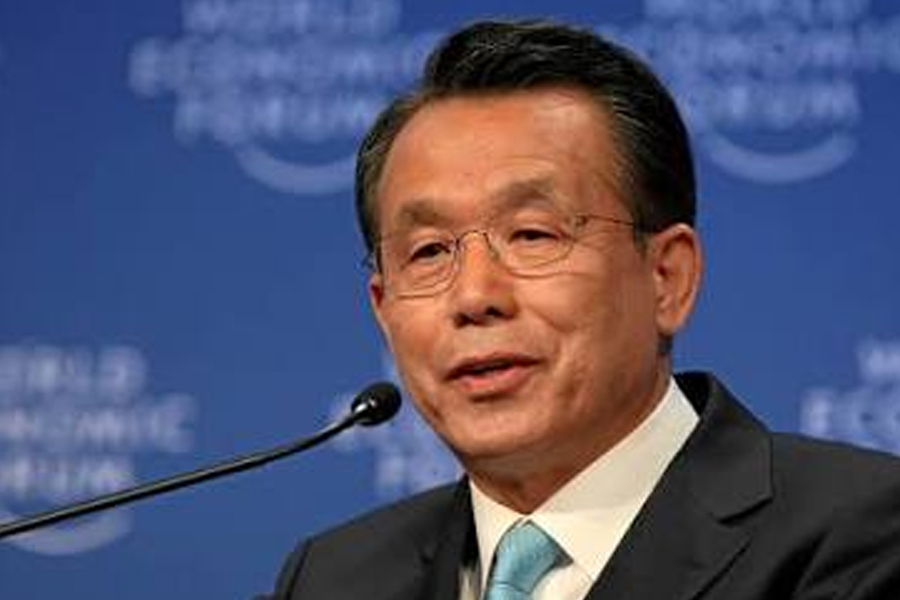
South Korean economist, diplomat, scholar, and former politician Han Seung Soo was born in Chuncheon on December 28, 1936. He has worked in academia, national government, the UN, international finance, and global sustainability. Under President Lee Myung bak, he was South Korea’s 39th Prime Minister from February 29, 2008, to September 28, 2009. Han was a successful economist with an extraordinarily worldwide career before becoming Prime Minister.
Han’s broad public service shines out. His career took him from university classrooms to the World Bank, from Korean economic policy to Washington diplomacy, and to the UN General Assembly during one of the most difficult times in international politics.
Han Seung Soo Basic Information
| Category | Details |
|---|---|
| Full name | Han Seung Soo |
| Korean name | 한승수 |
| Hanja | 韓昇洙 |
| Born | December 28, 1936 |
| Birthplace | Chuncheon, Gangwon Province, South Korea |
| Clan | Cheongju Han clan |
| Art name | Chungang |
| Nationality | South Korean |
| Profession | Economist, diplomat, politician, professor |
| Prime Minister | February 29, 2008 to September 28, 2009 |
| Political affiliation | Conservative political groups, including the Grand National Party and People Power Party |
| Undergraduate degree | Yonsei University, 1960 |
| MPA | Seoul National University, 1963 |
| PhD | University of York, 1968 |
| Spouse | Hong So ja |
| Children | Han Sang jun and Han Sang eun |
| Major international role | President of the 56th United Nations General Assembly |
| UNGA presidency | 2001 to 2002 |
Childhood and Cheongju Han Family Background
Han was born during the Japanese colonial period in Korea, when Chuncheon was part of Gangwon Province. He was one of five children, the second of three sons and two daughters born to Han Seok rin and a mother from the Jincheon Song clan.
His family background connects him to the Cheongju Han clan, a historically prominent Korean lineage associated with government service and, over many generations, links to the country’s royal and political history. Han has used the art name Chungang, or 춘강, reflecting another dimension of his identity beyond his official public career.
His early education eventually led him toward political science and economics. He graduated from Chuncheon High School before attending Yonsei University, where he earned a bachelor’s degree in Political Science and Diplomacy in 1960. Three years later, he completed a Master of Public Administration at Seoul National University’s Graduate School of Public Administration.
His academic ambitions then took him abroad. At the University of York in England, he earned a PhD in Economics in 1968. His studies focused in part on European economic integration, including questions surrounding European budgets, taxation, and the Common Market.
Academic Career and International Economics
Before becoming a major political figure, Han spent nearly two decades as an academic economist. He joined Seoul National University as a professor in 1970 and remained associated with the university until 1988.
His academic career was never confined to one country. He taught or conducted research at the University of York from 1965 to 1968 and at Emmanuel College, University of Cambridge, from 1968 to 1970. He later became a Senior Fulbright Scholar at Harvard during 1985 and 1986 and worked at the University of Tokyo from 1986 to 1987.
International economic institutions also became part of his professional life. He served as a consultant to the World Bank and the United Nations Economic and Social Commission for Asia and the Pacific. From 1974 to 1976, he was seconded by the World Bank to serve as Financial Adviser to the Government of Jordan.
I find this period important because it explains the international character of his later political career. Han entered Korean government after already possessing experience in economics, development policy, and international institutions.
Entry Into Korean Government and Politics
Han entered the National Assembly in 1988, representing Chuncheon, and subsequently held important economic and diplomatic posts.
From 1988 to 1990, he served as Minister of Trade and Industry under President Roh Tae woo. His government work included involvement in the early development of Asia Pacific economic cooperation. South Korea’s participation in the emerging APEC framework became an important element of the country’s growing economic diplomacy.
Han later served as South Korea’s Ambassador to the United States from 1993 to 1994. From 1994 to 1995, he became Chief of Staff to President Kim Young sam.
His next major economic assignment came in 1996, when he became Deputy Prime Minister and Minister of Finance and Economy. South Korea joined the Organisation for Economic Co operation and Development in 1996, and Han played an important role in the accession process.
Foreign Minister and United Nations General Assembly President
Han served as Minister of Foreign Affairs and Trade from 2001 to 2002. At the same time, he held one of the most prominent diplomatic positions available to a South Korean representative: President of the 56th Session of the United Nations General Assembly.
He was elected on September 12, 2001, one day after the September 11 terrorist attacks in the United States. The timing transformed what would normally have been a formal transition into an international crisis.
As General Assembly president, Han condemned the attacks and emphasized international cooperation against terrorism. The Assembly subsequently adopted Resolution 56/1, condemning the attacks and calling for cooperation to bring those responsible to justice.
His agenda was broader than counterterrorism. He emphasized Security Council reform, peacekeeping, human rights, development, Africa, the Millennium Declaration, and efforts to narrow the digital divide. The year required him to balance an immediate security crisis with the United Nations’ longer development and humanitarian agenda.
His Chef de Cabinet during the presidency was Ban Ki moon, who would later become Secretary General of the United Nations. Han also accepted the 2001 Nobel Peace Prize on behalf of the United Nations and Secretary General Kofi Annan.
In 2007, Han published Beyond the Shadow of 9/11: A Year at the United Nations General Assembly, drawing on his experiences and diaries from that extraordinary year.
Prime Minister of South Korea
In 2008, President Lee Myung bak selected Han Prime Minister, bringing him back into Korean politics.
His term was from February 29, 2008, to September 28, 2009. American beef import ambitions put the administration under political strain during his term. Han resigned amid large protests. He remained in office after a partial government restructuring.
His administration supported South Korea’s green growth ambitions. Han presided over the 2009 OECD Ministerial Council Meeting, which overwhelmingly endorsed a green growth declaration.
International sustainability, climate policy, disaster risk reduction, and water security were his priorities after leaving the Prime Minister’s Office.
Global Green Growth and International Work
Han became the founding chair of the Global Green Growth Institute, serving from 2010 to 2012. His later career continued to connect economic development with environmental policy.
From 2013 to 2018, he served as a United Nations Special Envoy for Disaster Risk Reduction and Water. He also chaired the High Level Experts and Leaders Panel on Water and Disasters and participated in several international sustainability initiatives.
His international corporate experience included service as an Independent Non Executive Director of Standard Chartered from 2010 to 2019. He was also associated with the Temasek International Panel between 2004 and 2018.
Other advisory activities have connected him with Asian universities, development institutions, and water policy groups. He also founded GG56 Ltd., associated with areas including big data and blockchain technology.
Han Seung Soo and His Wife Hong So Ja
Han’s wife is Hong So ja, who has had her own public career in Korean civic and educational organizations. She served as Vice President of the Korea Red Cross and as President of the Korea University Female Alumni Association.
Her family background is notable because of a connection to the family of former President Park Chung hee. Hong So ja was a daughter of Yuk In soon, who was a sister of Yuk Young soo, the wife of Park Chung hee.
This created a marital connection between Han’s family and the Park family. The relationship is particularly interesting in the context of Korean political history because several generations of prominent political figures were connected through both public life and family networks.
Han Seung Soo’s Children
Han and Hong So ja have two children, a son and a daughter.
Han Sang Jun
Han Sang jun, sometimes rendered Han Sang joon, is identified in biographical records as the couple’s son. Unlike his father, he has maintained a largely private life. Detailed information about his occupation, professional activities, and personal affairs is limited in the public domain.
The relative absence of publicity surrounding him reflects a broader pattern in Han’s family. Although Han Seung Soo spent decades in highly visible public positions, his immediate family has generally remained outside the center of political and media attention.
Han Sang Eun
Han Sang eun is Han Seung Soo and Hong So ja’s daughter. She is married to Kim Se yeon, the son of former National Assembly member Kim Jin jae.
Through this marriage, another political connection was added to the family tree. Nevertheless, public information about Han Sang eun’s private and professional life remains limited compared with the extensive documentation surrounding her father.
Family Connections and Private Life
The family relationships surrounding Han Seung Soo illustrate how political, diplomatic, academic, and social networks can intersect in South Korean public life. His Cheongju Han heritage, his marriage into a family connected to the Park Chung hee lineage, and his daughter’s marriage into another politically connected family all form part of the broader story.
At the same time, it is important not to confuse family connections with professional achievement. Han’s own career developed through universities, government offices, international organizations, and diplomatic appointments over several decades.
Away from official duties, he has been associated with mountain hiking, baduk, and collecting biographies and autobiographies. These interests provide a quieter portrait of a man whose professional life frequently placed him in conference rooms, diplomatic negotiations, and international assemblies.
Awards and Publications
Han has received numerous honors during his career. Among them is an honorary Knight Commander of the Order of the British Empire, awarded in 2004 by Queen Elizabeth II. He has also received Korean decorations recognizing public service and contributions in areas including industry and national security.
His publications reflect his dual interests in economics and international affairs. Beyond the Shadow of 9/11 provides an account of his year at the United Nations General Assembly, while Here for Global Good: Collected Speeches of Han Seung Soo, published in 2015, gathers speeches from different stages of his international career.
He has also written academic works concerning European economic integration, taxation, budgets, and the Common Market, along with numerous articles and speeches.
Han Seung Soo in His Later Years
Han worked in international affairs after leaving Korean politics. His latter public actions focused on water security, disaster preparedness, sustainability, green growth, and international collaboration.
He gave Here for Global Good to Inter Parliamentary Union Secretary General candidate Jun Sang soo in November 2025. The encounter showed Han’s commitment to international collaboration and public service.
By 2026, Han was 89 and still involved in international consulting and water projects. From economic academia to government, diplomacy, the UN, corporate governance, and global sustainability, his career spanned over 60 years.
Han Seung Soo’s Professional Timeline
| Year | Major development |
|---|---|
| 1936 | Born in Chuncheon |
| 1960 | Graduated from Yonsei University |
| 1963 | Earned MPA from Seoul National University |
| 1965 to 1968 | Teaching and research at the University of York |
| 1968 | Earned PhD in Economics from the University of York |
| 1968 to 1970 | Associated with Cambridge University |
| 1970 to 1988 | Professor of Economics at Seoul National University |
| 1974 to 1976 | Financial Adviser to Jordan through World Bank secondment |
| 1988 to 1990 | Minister of Trade and Industry |
| 1993 to 1994 | Ambassador to the United States |
| 1994 to 1995 | Chief of Staff to President Kim Young sam |
| 1996 to 1997 | Deputy Prime Minister and Finance and Economy Minister |
| 2001 to 2002 | Foreign Minister and President of the 56th UN General Assembly |
| 2004 | Received honorary KBE |
| 2007 to 2008 | UN Special Envoy on Climate Change |
| 2008 to 2009 | Prime Minister of South Korea |
| 2010 to 2012 | Founding Chair of the Global Green Growth Institute |
| 2010 to 2019 | Independent Non Executive Director at Standard Chartered |
| 2013 to 2018 | UN Special Envoy for Disaster Risk Reduction and Water |
| 2014 | Chaired PyeongChang Winter Olympics Bid Committee |
| 2015 | Published Here for Global Good |
| 2025 | Continued international meetings and global cooperation activities |
| 2026 | Remained active in international advisory and water initiatives |
FAQ
Who is Han Seung Soo?
Han Seung Soo is a South Korean economist, diplomat, politician, and former Prime Minister. He served as Prime Minister from February 2008 to September 2009 and previously held major economic and diplomatic positions.
When was Han Seung Soo born?
Han Seung Soo was born on December 28, 1936, in Chuncheon, South Korea.
Who is Han Seung Soo’s wife?
His wife is Hong So ja, who has held leadership positions in organizations including the Korea Red Cross and the Korea University Female Alumni Association.
How many children does Han Seung Soo have?
Han Seung Soo and Hong So ja have two children, Han Sang jun and Han Sang eun.
What did Han Seung Soo do at the United Nations?
He served as President of the 56th Session of the United Nations General Assembly from September 2001 to September 2002. His tenure coincided with the September 11 attacks and included extensive work on terrorism, peace and security, development, human rights, and UN reform.
Who was Han Seung Soo’s Chef de Cabinet at the UN?
His Chef de Cabinet during the 56th General Assembly presidency was Ban Ki moon, who later became Secretary General of the United Nations.
What is Han Seung Soo’s connection to the Park Chung hee family?
Through his marriage to Hong So ja, Han became connected to the Park Chung hee family. Hong So ja was the daughter of Yuk In soon, sister of Yuk Young soo, who was married to former President Park Chung hee.
What did Han Seung Soo study?
He studied Political Science and Diplomacy at Yonsei University, Public Administration at Seoul National University, and Economics at the University of York, where he earned his doctorate in 1968.
What are Han Seung Soo’s main areas of later international work?
His later activities have focused particularly on green growth, climate policy, water security, disaster risk reduction, sustainable development, and international cooperation.
What is Han Seung Soo known for outside politics?
Beyond government and diplomacy, Han is known for his academic career, international economic work, United Nations leadership, and long involvement with global sustainability initiatives. His personal interests have included mountain hiking, baduk, and collecting biographies and autobiographies.