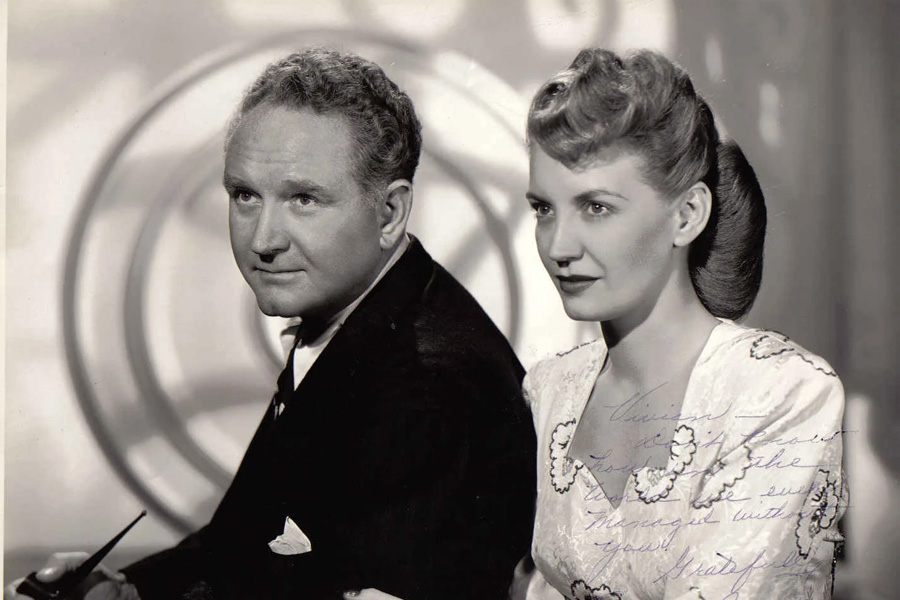
Basic Information
| Information | Details |
|---|---|
| Full name | Edna Marie Stillwell |
| Also known as | Edna Stillwell Skelton, Edna Borzage, Edna Pound |
| Born | May 25, 1915 |
| Birthplace | Mount Washington, Jackson County, Missouri |
| Died | November 15, 1982 |
| Age at death | 67 |
| Occupations | Comedy writer, manager, talent agent |
| Best known for | Managing and developing Red Skelton’s early career |
| First husband | Red Skelton |
| Second husband | Frank Borzage |
| Third husband | Leon George Pound |
| Children | None |
| Mother | Dollie Belle Tarwater Stillwell |
| Father | George Vincent Stillwell |
| Burial | Pierce Brothers Westwood Village Memorial Park, Los Angeles |
Edna Stillwell Skelton Early Life and Family
When I look at Edna Stillwell Skelton’s story, the first thing that stands out is how unlikely her path was. She was born on May 25, 1915, in Mount Washington, Jackson County, Missouri, into a working class family that had little connection to the glittering entertainment world she would eventually help conquer.
Her parents were George Vincent Stillwell, born around 1883, and Dollie Belle Tarwater, born in 1894. Edna was one of four children, with older siblings Ethel, Orville George, and Frances. Her childhood was shaped by family hardship. Her parents separated or divorced when she was very young, while her father was drafted during World War I.
Her mother, Dollie, carried much of the responsibility for supporting the family. By the early 1930s, Edna was living with her mother in Kansas City. One family address associated with the period was 3828 East 9th Street.
That background seems important to understanding Edna herself. She developed a practical streak early. She was not born into show business royalty. She learned to work, negotiate, observe people, and make things happen.
As a teenager, she worked as an usherette, sometimes described as a head usherette, at Kansas City theaters such as Loew’s or the Pantages. The theater was more than a workplace. It was her window into performance, audiences, timing, and the strange machinery of entertainment.
And that window eventually introduced her to a young comedian named Red Skelton.
Edna Stillwell and Red Skelton
Edna met Richard Bernard “Red” Skelton while both were still young. Their relationship began in the colorful world of walkathons, where contestants competed in endurance events that could last for weeks.
In 1932, Edna was involved with a walkathon at El Torreon in Kansas City. The event reportedly lasted 117 days. She worked as a cashier and became associated with the competition, while Skelton served as master of ceremonies.
Their relationship was not exactly love at first sight. Edna reportedly disliked the young performer initially. Yet the two discovered that they had something unusual in common: ambition.
They married on June 1, 1932, in Kansas City. Edna was only 17, although some records and later accounts give slightly different ages and dates. Skelton was also still a teenager.
The marriage began with very little money. Edna reportedly even paid for the marriage license. But financially, she quickly became the practical half of the partnership.
Skelton had talent. Edna understood how to turn that talent into a career.
The Woman Who Helped Build Red Skelton
Edna was far more than a wife standing beside a rising comedian. She became Skelton’s manager, agent, comedy writer, financial organizer, and creative partner.
In an entertainment industry dominated by men, that was remarkable.
She negotiated his pay when others might have accepted whatever was offered. A proposed walkathon salary could become $100 a week, then $500 a week, as Edna pushed for better terms. She also negotiated perks and made sure Skelton’s earnings were managed rather than immediately spent.
That mattered because Skelton could be impulsive with money. Edna became the person who looked beyond the next performance and considered the next year.
She also encouraged him to study and complete his education after he had left school. In many ways, she functioned as both business manager and stabilizing force.
Skelton later gave her enormous credit, famously suggesting that without her he would have been “a bum.” Their partnership was a classic contrast: the restless clown and the practical strategist.
The Doughnut Dunkers and Junior
One of Edna’s most fascinating contributions was her role in developing some of Skelton’s best known comedy characters and routines.
The “Doughnut Dunkers” routine came from ordinary observation. While in Montreal, Edna and Skelton reportedly watched a man in a diner secretly dunking his doughnut. Instead of dismissing the moment as meaningless, Edna recognized comedy hiding inside it.
That was her gift.
The simple act became exaggerated physical comedy. Skelton demonstrated different ways people might dunk doughnuts, turning an everyday behavior into a performance. The routine helped them obtain important bookings and showed how powerful observational comedy could be.
Then there was Junior, the “Mean Widdle Kid.”
The character grew partly from Skelton’s behavior at home, particularly his tantrums when he wanted something and did not get it. Edna refined the idea and helped shape it into a performance character suitable for radio and stage.
Skelton supplied the famous “I dood it!” expression, but the character itself benefited from Edna’s creative shaping.
She understood that a character needed more than a funny line. It needed rhythm, personality, recognizable behavior, and a reason for audiences to want to see it again.
Edna’s Comedy Writing Process
Edna used a sensible and rather methodical writing style.
She didn’t just sit down and try to make up jokes. Observation, performance, experimentation, and storage provided the material.
According to reports, she kept collections of routines and jokes on 3 by 5 index cards. Simple categories like “Birds,” “Hotels,” or “Tennis” could be used to arrange the subjects.
Although it sounds almost archaic now, the system was very clever.
Consider a small version of a comic library. Edna might look over the cards to find an old gag, reshape it, and include it into a fresh performance when a certain issue came up.
Unused content wasn’t always thrown away. It was spared.
As Skelton transitioned from vaudeville to radio, cinema, and television, that habit became even more valuable. Edna assisted in maintaining the organization of the comedy machine, which was continuously producing material.
Radio, Hollywood and Television
Edna’s professional influence expanded as Skelton became a national star.
From 1938 to 1939, she worked with the radio program Avalon Time, using her maiden name in connection with her appearances and writing. She also wrote for programs associated with Skelton, including The Raleigh Cigarette Program.
Her work was not limited to writing punch lines. She selected material, revised it, organized it, and considered what worked for Skelton’s particular style.
That distinction is important.
A joke can be funny on paper and terrible on stage. Edna knew that Skelton was fundamentally a physical comedian. His greatest strength was not simply what he said. It was what his face, body, timing, and characters could communicate.
She helped build material around those strengths.
By the 1940s, Skelton’s career had expanded into Hollywood. Edna remained involved with his professional development and continued writing material. She was associated with routines including “Guzzler’s Gin,” used in the 1945 film Ziegfeld Follies segment “When Television Comes.”
Later came The Red Skelton Show, which began in 1951 and became one of television’s enduring comedy programs.
Although professional collaboration between Edna and Skelton eventually tapered off, her foundational influence remained part of the structure underneath his television career.
Edna and Red After Divorce
Their marriage ended in February 1943.
Edna had filed for divorce in late 1942, citing cruelty, but the separation did not destroy their professional relationship. In one memorable account, they left court arm in arm.
That image says quite a lot.
Marriage was over. Partnership was not.
Edna continued managing and writing for Skelton after their divorce, receiving a substantial weekly salary for her work. She remained connected to his career for years, with their primary professional collaboration lasting until around 1952.
Their relationship was complicated, but it was also unusually durable. Edna understood Skelton’s talents because she had helped shape the machinery around them from the beginning.
Edna’s Three Marriages
| Husband | Marriage | Divorce or Death |
|---|---|---|
| Red Skelton | June 1, 1932 | February 1943 |
| Frank Borzage | November 25, 1945 | July 18, 1949 |
| Leon George Pound | December 10, 1963 | June 16, 1976 |
After Skelton, Edna married Frank Borzage, the celebrated Hollywood director, on November 25, 1945. Borzage had directed Skelton in films including Flight Command.
Their marriage lasted less than four years. They divorced on July 18, 1949, on grounds of mental cruelty.
Borzage died from cancer in 1962.
On December 10, 1963, Edna married Leon George Pound in Long Beach, California. Pound was described as a businessman, and this third marriage appears to have been considerably more stable. They remained married until Pound’s death on June 16, 1976.
Edna’s Parents and Siblings
Edna’s family remained a relatively private part of her story.
Her father, George Vincent Stillwell, lived from approximately 1883 to 1961. He married Dollie Belle Tarwater in 1908 and was drafted during World War I.
Her mother, Dollie Belle Tarwater Stillwell, lived from 1894 to 1980. She worked hard to support her children after the family separation and appears to have played an especially important role in Edna’s early life.
Edna’s siblings were Ethel Stillwell, Orville George Stillwell, and Frances Stillwell. Orville was her older brother and married Ruth Evelyn Lorenzen.
Unlike Edna’s connection to Hollywood history, her siblings largely remained outside the public spotlight.
Did Edna Stillwell Have Children?
No. Edna Stillwell did not have children.
This point is important because some family trees have incorrectly connected her to Red Skelton’s later children, Valentina and Richard. Those children were born during Skelton’s second marriage and were not Edna’s children.
Edna’s family legacy instead rests heavily on her professional influence and her relationship with Skelton.
She once described him as “all the family I have,” a revealing statement considering how intertwined their lives remained after their divorce.
Edna Stillwell Skelton’s Financial Life
Edna’s financial story was closely connected to her management of Skelton.
In their earliest years, money was scarce. She helped keep the household afloat while pushing Skelton toward better contracts. As his popularity increased, she negotiated higher performance fees and managed his earnings.
She also invested some of his money, including in real estate, while attempting to protect him from his own spending habits.
After their divorce, her professional income came largely through her continuing management and writing work.
There is no strong indication that Edna accumulated an enormous independent fortune. Her financial security appears to have come from decades of professional work, her marriages, and the compensation she earned while helping manage one of America’s most successful comedians.
Edna Stillwell Skelton’s Final Years
Edna spent her later years in California, with connections to areas including Torrance and Lomita.
She died of cancer on November 15, 1982, at Little Company of Mary Hospital in Torrance, California. She was 67.
She was buried at Pierce Brothers Westwood Village Memorial Park in Los Angeles.
By then, the comedy world she had entered as a teenage usherette had changed dramatically. Vaudeville had faded, radio had transformed, and television had become the dominant entertainment medium.
But the foundations she helped build for Red Skelton remained.
Edna Stillwell Skelton and the Legacy Behind the Laughs
Because Edna embodies a portion of entertainment history that sometimes goes unnoticed, I find her story particularly fascinating.
Red Skelton was seen by audiences.
They made fun of Freddie the Freeloader, Junior, Clem Kadiddlehopper, and his visual routines. They recalled the voices, the physical humor, the clowning, and the TV shows.
A woman who was knowledgeable about contracts, finances, character development, joke structure, audience response, and timing stood behind that performance.
Edna was aware that comedy involved more than just a humorous performer. It involved selecting the appropriate content, tailoring it to the performer, testing it in front of audiences, keeping what worked, and being prepared to discard what didn’t.
Her impact was especially noticeable in the early years of Skelton’s transition from a struggling young performer to a national celebrity.
She assisted in transforming untapped potential into something that could be replicated.
And that might be the most illuminating aspect of her legacy. Edna Stillwell Skelton was more than just a figure in the background. She contributed to the stage’s construction.
FAQ
Who was Edna Stillwell Skelton?
Edna Stillwell Skelton was an American comedy writer, manager, and talent agent best known for helping develop Red Skelton’s early career. She worked as his manager, writer, and creative partner during some of his most important formative years.
When was Edna Stillwell Skelton born?
Edna was born on May 25, 1915, in Mount Washington, Jackson County, Missouri.
When did Edna Stillwell marry Red Skelton?
Edna and Red Skelton married on June 1, 1932, in Kansas City, Missouri. Their marriage ended in February 1943, although their professional relationship continued for years afterward.
Did Edna Stillwell have children?
No. Edna did not have children. Red Skelton’s children Valentina and Richard were from his second marriage and were not Edna’s children.
What did Edna Stillwell do for Red Skelton?
She served as his manager, agent, comedy writer, financial organizer, and creative collaborator. She helped negotiate his contracts and contributed to important characters and routines.
Did Edna create Junior?
Edna played a major role in developing the “Mean Widdle Kid,” commonly known as Junior. She helped shape the character from Skelton’s childhood-like antics, while Skelton contributed the famous “I dood it!” expression.
What was the Doughnut Dunkers routine?
The Doughnut Dunkers routine grew from Edna and Skelton observing a man dunking a doughnut in a Montreal diner. They transformed the ordinary behavior into exaggerated physical comedy that became an important part of Skelton’s early success.
Who was Edna Stillwell’s second husband?
Her second husband was Frank Borzage, an Academy Award-winning Hollywood director. They married in 1945 and divorced in 1949.
Who was Edna Stillwell’s third husband?
Her third husband was Leon George Pound, a businessman whom she married on December 10, 1963, in Long Beach, California. They remained married until his death in 1976.
When did Edna Stillwell Skelton die?
Edna died on November 15, 1982, at age 67 in Torrance, California. She was buried at Pierce Brothers Westwood Village Memorial Park in Los Angeles.