Early Years in a Noble Shadow
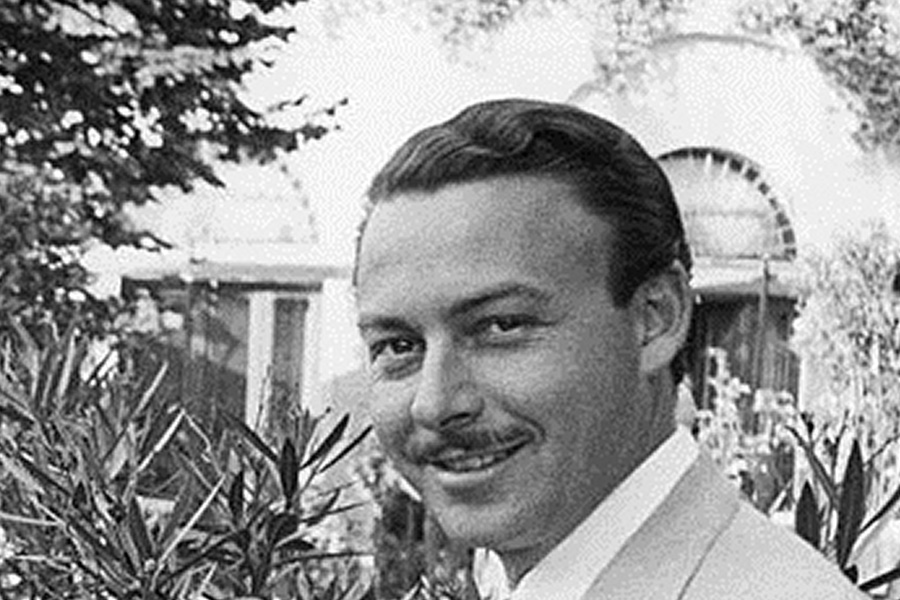
Growing up amidst old grandeur makes me wonder how life begins. On May 28, 1924, in Madrid, Spain, Prince Alfonso of Hohenlohe-Langenburg was born, the eldest son of a German princely family with Spanish aristocratic roots. His name, Alfonso Maximiliano Victorio Eugenio Alejandro Maria Pablo de la Santisima Trinidad y Todos los Santos, Prinz zu Hohenlohe-Langenburg, sounds like a forgotten symphony, indicating his historical significance. He gracefully roamed Bohemian palaces and Spanish mansions as a child, speaking Spanish, German, French, and English. Private teachers formed his mentality on war-torn family estates. His family lost their Württemberg princedom to Napoleonic invasions, and post-World War II upheavals further eroded fortunes. This setting gave him resilience, like a phoenix rising from faded opulence.
His father, Prince Maximilian Egon zu Hohenlohe-Langenburg (1897–1968), was a diplomat who valiantly tried to stop Hitler’s takeover of Czechoslovakia in 1938. At Rothenhaus Castle, Maximilian hosted British mediator Lord Runciman, but history overcame him. After the war, communist expropriation forced the family to move to Spain from Bohemia. Maria de la Piedad de Yturbe y von Scholtz-Hermensdorff, Alfonso’s mother, lived from 1892 to 1990. She inherited a rich Mexican-Spanish ancestry from her father, a diplomat who worked in courts from St. Petersburg to Paris. Her Basque heritage and the family’s Mexican Revolution losses gave Alfonso’s childhood transatlantic intrigue. The oldest of six siblings, he carried bits of this mosaic.
The Siblings: A Tapestry of Aristocratic Bonds
Family, for me, feels like roots anchoring a tree against storms. Alfonso’s siblings formed such a network, though details of their lives often remain shrouded in privacy. Maria Francesca, the eldest sister nicknamed Pimpinella, inherited their mother’s title as Marquesa de Belvis de las Navas. She maintained the family’s noble traditions, a quiet guardian of heritage. Then came Christian, born around 1925 and dying in 1980, whose life stayed largely out of the spotlight, perhaps focused on personal estates or quiet pursuits. Elisabeth Christine followed, involved in family affairs but equally discreet.
Max Emanuel, sometimes called Max von Hohenlohe, shared Alfonso’s entrepreneurial spark, collaborating on business ventures and fathering descendants who continue the line. Beatrice, the youngest, known as Tenu, rounded out the group, often appearing in family anecdotes as a lively presence. Together, they navigated the 20th century’s upheavals, from the Iron Curtain’s fall on their paternal lands to Spain’s post-war recovery. Alfonso, as the trailblazer, often led the way, restoring fortunes through bold moves.
| Sibling Name | Birth/Death | Key Notes |
|---|---|---|
| Maria Francesca (Pimpinella) | Unknown | Inherited maternal titles; eldest sister |
| Christian | 1925-1980 | Limited public details; family-oriented |
| Elisabeth Christine | Unknown | Involved in estate management |
| Max Emanuel | Unknown | Business collaborator; continued family line |
| Beatrice (Tenu) | Unknown | Youngest; featured in family stories |
Marriages: Whirlwinds of Romance and Scandal
Love stories in nobility can resemble tempests, sweeping in glamour and leaving ripples. Alfonso’s first marriage in 1955 to Princess Ira von Furstenberg captivated the world. At just 15 years old, Ira, an Austrian-Italian heiress to the Fiat fortune, wed the 31-year-old prince in a lavish 16-day Venice ceremony on September 17 and 21, complete with papal dispensation. Four hundred guests, including royalty and celebrities, witnessed the union, but it unraveled by 1960 in a Mexican divorce, annulled by the Church in 1969. Ira’s youth and subsequent remarriage to Brazilian industrialist Baby Pignatari fueled tabloid frenzy.
His second union, on May 3, 1973, in Marbella, was to British actress Jocelyn Lane, known as Jackie. Their stormy relationship lasted until 1985, marked by Hollywood connections and passionate highs. Finally, in 1991, he married Marilys Healing, a Gibraltarian former model born in 1941, in Vaduz. Their bond brought seclusion and joy on a Ronda estate, but tragedy struck with her apparent suicide on November 2, 2000, coinciding with Alfonso’s prostate cancer diagnosis.
The Children: Carrying the Flame Forward
As a parent, Alfonso sowed seeds that bloomed into diverse paths, like branches from a sturdy oak. With Ira, he had two sons: Prince Christoph Vittorio Umberto, born in 1956, who lived adventurously until his death in 2006 in Thailand. Prince Hubertus von Hohenlohe-Langenburg, born May 31, 1959, became an Olympic skier representing Mexico, a photographer, and musician, blending athleticism with artistry. He maintains the family’s media presence and has descendants, including granddaughter Trinidad Scholtz.
From Jocelyn Lane came Princess Arriana Theresa Maria von Hohenlohe-Langenburg, born in 1975, who married financier Dixon Boardman and moves in high-society circles. Their daughter, Olimpia Grace Boardman, born in 2008, represents the next generation. Extramaritally, with Swiss model Heidi Balzer, Alfonso fathered Princess Desiree von Hohenlohe, born in 1980, now Countess d’Ursel, involved in family legacies.
| Child Name | Birth/Death | Mother | Notable Achievements |
|---|---|---|---|
| Prince Christoph | 1956-2006 | Ira von Furstenberg | Adventurer; died in Thailand |
| Prince Hubertus | 1959-Present | Ira von Furstenberg | Olympic skier for Mexico; photographer, musician |
| Princess Arriana | 1975-Present | Jocelyn Lane | Society figure; married Dixon Boardman |
| Princess Desiree | 1980-Present | Heidi Balzer | Countess d’Ursel; family affairs |
Career: Transforming Coasts into Kingdoms
I admire how Alfonso turned vision into empire, like an alchemist spinning sand into gold. In 1946, during a picnic stop in a charcoal-burning Rolls Royce with his father, he discovered Marbella’s untamed beauty. By 1947, he purchased Finca Santa Margarita for 150,000 pesetas, initially as a family retreat. Hosting aristocratic guests swelled, leading to the Marbella Club Hotel’s founding in 1954. This haven, emphasizing privacy and Andalusian charm, drew icons like the Duke of Windsor, Brigitte Bardot, and Sophia Loren, spawning the Golden Mile and creating over 60,000 jobs by the 2000s.
His empire expanded: Volkswagen dealership in Mexico, Volvo in Spain, resorts in the Arabian Gulf, Bahamas, Philippines, and beyond. In 1974, he introduced padel tennis to Europe at Marbella, revolutionizing leisure. By the 1990s, disillusioned by overdevelopment under mayor Jesus Gil y Gil and rising crime, he sold shares and retreated to Ronda for winemaking, producing acclaimed vintages from a 1991 estate with trout lakes and vineyards.
Key Milestones and Adventures
Life’s timeline for Alfonso reads like a novel’s plot twists. Surviving a plane crash on August 3, 1954, in Preston, Connecticut, just before opening Marbella Club. The 1960s peaked his fame, mingling with Hollywood stars and Arab sheikhs. Affairs with Ava Gardner and Kim Novak added spice. In the 1970s and 1980s, he diversified, but the 1990s brought retreat. His death on December 21, 2003, at 79, marked the end of an era, buried in Marbella’s San Bernabe Cemetery.
FAQ
What inspired Prince Alfonso to found the Marbella Club?
The spark ignited during a 1946 roadside picnic in Marbella, where the pristine coastline captivated him. Purchasing land in 1947, he transformed a phylloxera-ravaged vineyard into a private estate. As guests flooded in, including Rothschilds and Bismarcks, he evolved it into the 1954 luxury hotel, prioritizing exclusivity over mass appeal.
How did his family background influence his business acumen?
Rooted in a lineage tracing to the 12th century Holy Roman Empire, Alfonso’s family endured losses from Napoleonic wars, Mexican Revolution, and World War II. This instilled pragmatism; his father’s diplomatic failures and mother’s diplomatic ties honed his global network, turning depleted fortunes into tourism triumphs.
Who were his grandchildren and their connections?
Olimpia Grace Boardman, born in 2008, is Arriana’s daughter with Dixon Boardman, embodying transatlantic society. Trinidad Scholtz descends from Hubertus, though details remain private. These young heirs carry forward the Hohenlohe blend of nobility and modernity.
What role did he play in introducing padel tennis to Europe?
Discovering the sport in Mexico, Alfonso built Europe’s first two padel courts in 1974 at Marbella Club. This innovation spread across the continent, merging his love for adventure with business foresight, much like planting a seed that grew into a widespread passion.
How did his marriages reflect his lifestyle?
Each union mirrored his jet-set world: Ira’s youthful glamour boosted finances but ended in scandal; Jackie’s acting ties added drama; Marilys offered late-life peace amid Ronda’s hills. They painted a portrait of a man chasing romance amid constant reinvention.