A concise portrait
Murad Velshi’s life reads like a map of the late 20th century: from Pretoria to Nairobi to Toronto, from bakery ovens to the red benches of the provincial legislature. He was born on 4 April 1935 in Pretoria, South Africa, and over the following decades he moved continents, raised a civic-minded family, ran businesses, and served as a Member of Provincial Parliament in Ontario. His story stitches together commerce, migration, faith, and public service — a personal odyssey that also reflects wider currents of history.
Basic information
| Field | Detail |
|---|---|
| Full name | Murad Velshi |
| Born | 4 April 1935 |
| Birthplace | Pretoria, South Africa |
| Ethnic / religious background | Ismaili Muslim of Gujarati Indian descent |
| Spouse | Mila (Mila Najrali Manjee) |
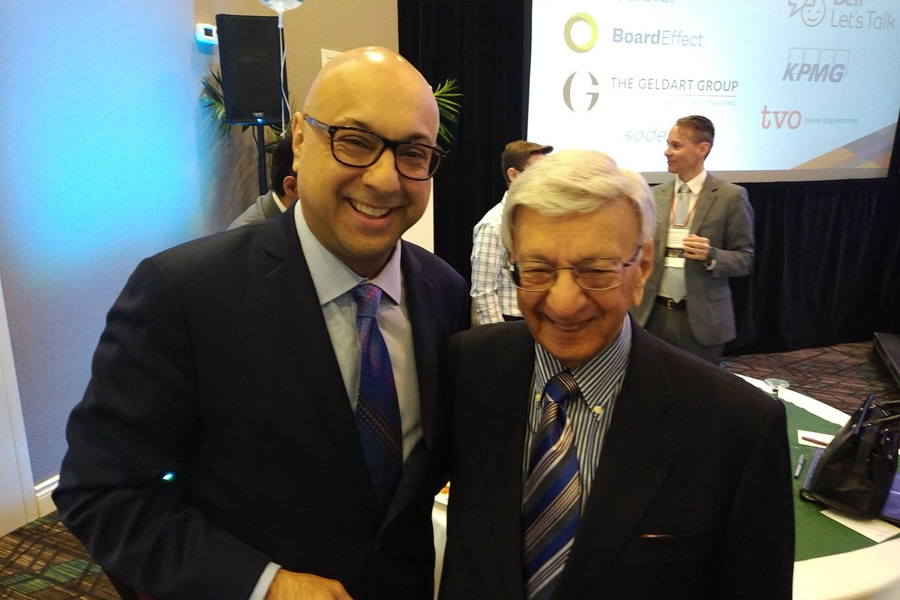
| Children | Ali Velshi (journalist), Ishrath Velshi (civic activist) |
| Political party | Ontario Liberal Party |
| Riding represented | Don Mills (Toronto) |
| Term as MPP | 1987 – 1990 |
| Parliamentary roles | Parliamentary Assistant to the Minister of Citizenship and Immigration (c. 1988–1989); Chair, Standing Committee on the Ombudsman (1989–1990) |
| Migration timeline | Moved from South Africa → Nairobi (≈1960) → Toronto (1971) |
| Business background | Family bakery (South Africa); travel agencies (Toronto) |
Early life and migration: dates, moves, and the bakery
Born in 1935, Murad Velshi came of age in the shadow of institutionalized segregation. The Velshi family operated a bakery in South Africa during the 1950s and into the 1960s — a small enterprise that supplied communities even as laws hardened around race and space. Around 1960 the family relocated to Nairobi, Kenya, a move driven by the social and political pressures of the era. A second major migration followed in 1971, when the family moved to Toronto, Canada, where they established themselves in business once again, this time operating travel agencies.
These moves are not just pinpoints on a timeline. They are stages in a life shaped by choice and constraint — choices to leave, to rebuild, to integrate. Each step carried numerical weight: years spent abroad, decades of entrepreneurship, and a single electoral victory that reshaped the family’s public profile.
Family and household: a civic engine
Murad and his wife, Mila, built a household organized around work, faith, and public engagement. Two immediate facts stand out:
- Their son, Ali Velshi, was born in Nairobi around 1968–1969, later becoming a prominent television journalist and author.
- Their daughter, Ishrath Velshi, pursued local civic engagement and ran for municipal office in 2014.
The Velshi household operated like a small civic incubator: business provided livelihood; migration provided perspective; faith and community networks provided identity and support. Numbers — years, elections, published works by family members — trace the outward-facing consequences of that domestic core.
Political career: elections, roles, and votes
Murad Velshi’s entry into electoral politics was neither accidental nor brief. He first stood for the Ontario provincial legislature in 1981, contesting the Don Mills seat and finishing second to the incumbent. That early campaign set the stage for a breakthrough in 1987, when he won the Don Mills riding as part of a broader Liberal surge. His tenure as MPP ran from 1987 to 1990, during which he held formal responsibilities:
- Parliamentary Assistant to the Minister of Citizenship and Immigration (approximately 1988–1989).
- Chair, Standing Committee on the Ombudsman (1989–1990).
Those appointments placed him at the intersection of immigration policy and oversight — areas of heavy symbolic and practical importance for someone whose life was defined by migration. In the 1990 election, he was defeated by the New Democratic Party candidate Margery Ward. Another attempt to re-enter provincial politics occurred in a 1 April 1993 by-election, where he finished second.
Electoral tallies are the blunt instruments of democratic life: wins, losses, vote percentages. Murad’s political record contains both the triumph of 1987 and the reversals of 1990 and 1993, a compact arc of public service measured in ballots and committee minutes.
Business and community leadership
Before and after politics, Murad’s public identity was rooted in entrepreneurship and community participation. The family’s early bakery in South Africa is an emblem of small-scale trade — ovens, loaves, daily routine. In Toronto, the shift to travel agencies signaled a different commercial rhythm: bookings, itineraries, cross-border movement. These businesses supported the family financially and placed Murad in networks that braided commerce and community leadership.
In the Ismaili and broader South Asian communities of Toronto, the Velshis were visible figures. Murad served not only as a businessman but as a connector: a person who translated immigrant experience into civic engagement and, later, political representation.
Timeline at a glance
| Year | Event |
|---|---|
| 1935 | Born in Pretoria, South Africa (4 April). |
| ≈1960 | Family relocates to Nairobi, Kenya. |
| 1968–69 | Son Ali Velshi born (Nairobi). |
| 1971 | Family emigrates to Toronto, Canada. |
| 1981 | Runs for Ontario legislature (Don Mills) — finishes second. |
| 1987 | Elected MPP for Don Mills. |
| 1988–1989 | Serves as Parliamentary Assistant to Citizenship & Immigration minister. |
| 1989–1990 | Chairs Standing Committee on the Ombudsman. |
| 1990 | Defeated in provincial election. |
| 1 Apr 1993 | Runs in by-election — finishes second. |
| 2014 | Daughter Ishrath runs in Toronto municipal election (publicly active). |
Numbers and patterns
There are clear numeric markers in Murad Velshi’s life: three countries of residence (South Africa, Kenya, Canada), two types of family business (bakery; travel agencies), multiple electoral bids (1981, 1987, 1990, 1993), and a single successful term as MPP (1987–1990). His birth year, 1935, anchors the arc across eras: colonial and apartheid-era Southern Africa, post-colonial East Africa, and late 20th-century Canada.
Public memory and the threads that remain
Murad Velshi’s name often appears now as part of a familial narrative, carried forward in the public work of his children and in memoiristic recollections. The arithmetic of public life — dates, terms, votes — combines with the quieter math of family: the counted meals at a kitchen table, the tally of journeys booked at a travel counter, the unenumerated lessons passed down. He is, in many accounts, less a solitary figure and more a hinge: one who connected past and future, private enterprise and public duty.
His career is measured in offices held and in the trajectory of a family that moved across continents. Like a bridge spanning several shores, his life links place to place and generation to generation.