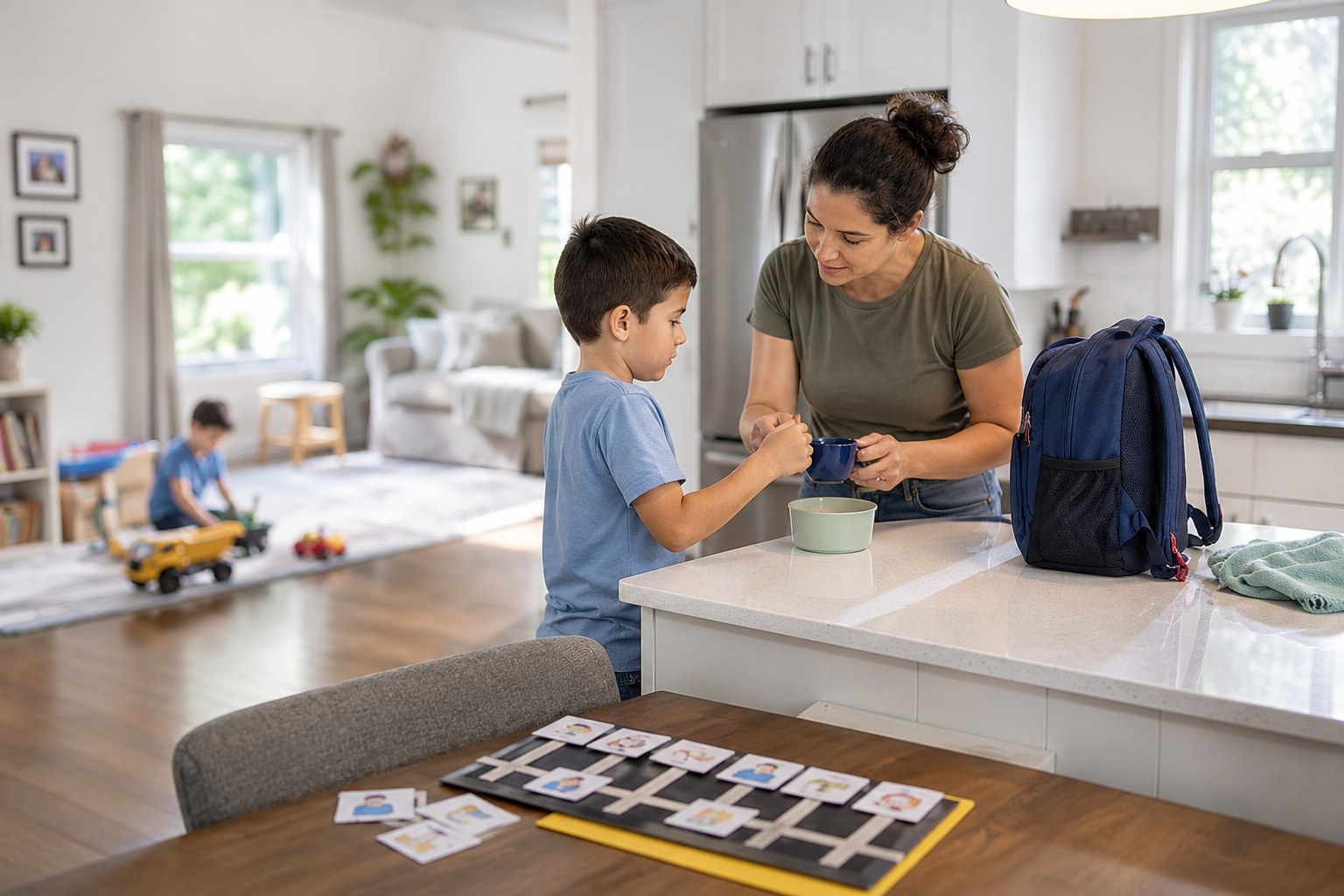
Children may learn a communication, self-care, play, or safety skill during a therapy session but need support using it with other people and in everyday settings. Families, educators, and clinicians can plan small practice opportunities at home, school, and in the community. The child’s comfort, preferences, and communication should guide the plan.
Choose meaningful daily-life goals
Start with a skill that matters to the child and family: asking for help, requesting a break, getting dressed, joining an activity, or following a familiar routine. A skill is useful when it helps the child participate or communicate, not simply when it looks typical. Goals should be individualized and reviewed as the child’s needs and preferences change.
Plan for use across people and settings
Using a skill in a new place or with a different person may require practice. A child who asks one clinician for a break may need time to use the same communication with a caregiver or teacher. Work with the support team to identify which cues, materials, and levels of help make the skill easier, then gradually practice in the settings where it is needed.
Build practice into home routines
Everyday activities can create natural opportunities without turning the whole day into instruction. For example, a morning routine might use a visual list for getting dressed, packing materials, and preparing to leave. Offer clear choices, allow enough time, and use the child’s preferred communication method. Keep a task manageable and provide support when needed.
Coordinate with school
With the family’s permission, share relevant strategies with educators and agree on a small number of practical goals. Identify how the skill will be supported during ordinary classroom activities and who will communicate progress. A plan that works in a therapy room may need adjustment for classroom noise, transitions, materials, or timing.
Practice safely in the community
Community practice might involve ordering a preferred item, asking for assistance, or following a safety routine during an outing. Choose a familiar, low-pressure opportunity first. Plan for sensory needs, accessibility, and the child’s ability to communicate discomfort or request a pause. Safety goals should be taught with appropriate supervision and qualified guidance.
Respect assent and notice distress
Adults should pay attention to verbal and nonverbal signals that the child is willing to participate. Offer choices, explain what will happen, and pause or modify an activity when the child shows distress or withdraws assent. Fatigue, pain, sensory overload, or communication barriers can affect participation; consider whether an unmet need or environmental change should be addressed before asking the child to continue.
Keep practice and progress manageable
Agree with the child’s team on what counts as progress, what support is appropriate, and how to reduce prompts when the child is ready. Track useful outcomes such as whether a child can communicate a need, complete a chosen routine with less help, or participate in a preferred activity. Avoid practicing too many goals at once or changing strategies without coordination.
Common questions
How long does it take for a skill to transfer?
There is no fixed timeline. Some skills appear in new settings quickly; others need repeated, supportive practice with different people and materials.
Can families practice skills at home?
Yes, when the goals and strategies are explained by the child’s care team and fit family routines. Practice should be manageable and respectful of the child’s preferences.
Should all children have the same goals?
No. Goals should reflect the individual child’s priorities, strengths, communication, and daily life.
What if a child uses a skill in therapy but not at school?
Review differences in cues, materials, noise, timing, and support. Work with the team to adapt practice to the school setting rather than assuming the child has lost the skill.
Skills are more likely to be useful when practice happens in the settings where the child wants or needs them. A coordinated, flexible approach can support participation while keeping the child’s autonomy and comfort central.