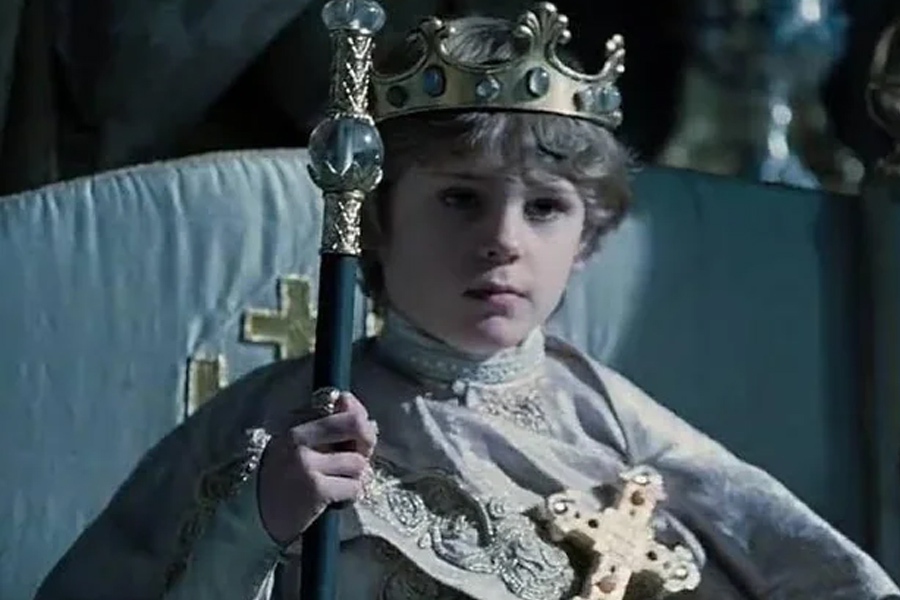
Basic Information
| Field | Details |
|---|---|
| Name | Baldwin V of Jerusalem |
| Also known as | Baldwin of Montferrat |
| Birth | December 1177 or January 1178 |
| Coronation as co-king | 20 November 1183 |
| Reign as sole king | 1185 to 1186 |
| Death | 1186 (likely August 1186; other accounts give May to September 1186) |
| Parents | William Longsword of Montferrat and Sibylla of Jerusalem |
| Regent / Guardian | Raymond III, Count of Tripoli and leading barons |
| Burial | Church of the Holy Sepulchre, Jerusalem |
| Age at death | About 8 to 9 years |
Biography
A small crown on a small head, Baldwin V lived a life measured in seasons rather than years and in politics rather than deeds. Born in late 1177 or early 1178, he arrived into a court already bent by illness and urgency. His uncle, King Baldwin IV, was stricken with a progressive disease that would leave him without heirs, and the kingdom trembled at the thought of a succession left open to rival factions.
To close that opening Baldwin IV arranged for his young nephew to be anointed and crowned co-king on 20 November 1183. The act was legal armor and a political compass. It answered a simple question of dynastic continuity, but it did not change the hard fact that Baldwin V was a child who could not rule. Authority remained in the hands of grown men who debated, guarded, and sometimes schemed on his behalf.
When Baldwin IV died in 1185 the boy became sole king in name, a figurehead who embodied continuity and the hopes of one lineage. Raymond III of Tripoli and other barons stood as regents. The government continued, but factional lines sharpened. The court was a chessboard and Baldwin V the pawn whose life decided outcomes beyond his grasp.
Family and Relations
Baldwin V existed at the center of a web that linked Jerusalem to Western Europe and northern Italy. His mother, Sibylla of Jerusalem, was the daughter of King Amalric I and the political actor who later married Guy of Lusignan. That second marriage produced a step-father whose ambitions split the baronage and created long memories of betrayal among some nobles.
On his father side Baldwin belonged to the Montferrat family, an Italian house with ties to the Aleramici and to courts across the Alps. His father, William Longsword of Montferrat, died before Baldwin was old enough to know him, and his paternal connections therefore remained more a matter of lineage than of day to day influence.
His maternal grandfather was Amalric I, one of the recent kings whose reign shaped the political structures Baldwin inherited. His maternal grandmother, Agnes of Courtenay, was a courtly force who pushed for her grandchildren to retain their place in succession. Baldwin IV, his uncle and the so called Leper King, cast the decisive shadow over Baldwin V by orchestrating the coronation that would shape the kingdom after him.
Raymond III of Tripoli served as the most important guardian and regent during Baldwin V’s short tenure as sole monarch. He and other magnates balanced power between the faction that favored Sibylla and Guy and the faction that sought to limit Guy’s claims. Those rivalries would explode after the child king’s death.
Coronation and Regency
The coronation on 20 November 1183 was a legal and symbolic move intended to secure the throne for Baldwin V and to block Guy of Lusignan. Baldwin IV used the ceremony as a way to bind the kingdom to a readable line of succession. The ceremony won support from many of the barons and was meant to reduce the likelihood of civil ruptures.
Yet the ceremony changed only the document. Real decisions were made by regents. The regency era, especially after Baldwin IV died in 1185, was an extended exercise in power sharing and bargaining. Raymond III assumed a leading role, but the kingdom’s government remained vulnerable to rival claims and to external pressures from Muslim neighbors.
Death and Aftermath
Baldwin V died in 1186 at a very young age, probably in August 1186, though sources provide a range that stretches from May to mid-September. His death removed the last neutral solution to the succession. Sibylla then asserted her rights, and with Guy of Lusignan she seized the crown, a move that alienated important noblemen and contributed to the political disunity that would follow.
Rumors and accusations of foul play circulated in some chronicles, but modern judgment treats those claims with caution. What is clear is this: a single small life ended, and the kingdom lost a brief window of stability. The consequences were immediate and grave; factional bitterness hardened and the realm entered a crisis that would leave it weaker in the face of external threats.
Timeline
| Year | Event |
|---|---|
| 1177-1178 | Birth of Baldwin, shortly after the death of his father William Longsword |
| 1180 | Sibylla marries Guy of Lusignan |
| 20 Nov 1183 | Baldwin V crowned co-king with Baldwin IV |
| 1185 | Death of Baldwin IV; Baldwin V becomes sole king under regency |
| 1186 | Death of Baldwin V; succession crisis follows and Sibylla and Guy take the throne |
Legacy and Historiography
Baldwin V is a symbol more than a sovereign. Historians describe him not by decrees signed or battles led but by the political role his existence and his death played. He is a hinge in the late 12th century; the palace that held him became, after his death, a place where loyalties broke like thin glass.
Medieval chroniclers record his life in brief entries, sometimes shaded by partisan perspective. Modern historians reconstruct the outline and assign probabilities to uncertain dates and rumors. The child king lives on in narrative as the moment when dynastic hope collided with factional reality.
FAQ
Who was Baldwin V related to on his mother side?
Baldwin V was the son of Sibylla of Jerusalem and the grandson of King Amalric I and Agnes of Courtenay.
Who acted as regent while Baldwin V was king?
Raymond III, Count of Tripoli, and other leading barons served as regents during Baldwin V’s nominal reign.
When was Baldwin V crowned co-king?
He was crowned co-king on 20 November 1183.
How old was Baldwin V when he died?
He was about 8 to 9 years old at the time of his death in 1186.
Did Baldwin V ever rule independently?
No, he never ruled independently; decisions were made by Baldwin IV while alive and by regents after 1185.
What happened after Baldwin V died?
His death allowed Sibylla to claim the crown and to have Guy of Lusignan made king-consort, a change that intensified factional conflict.