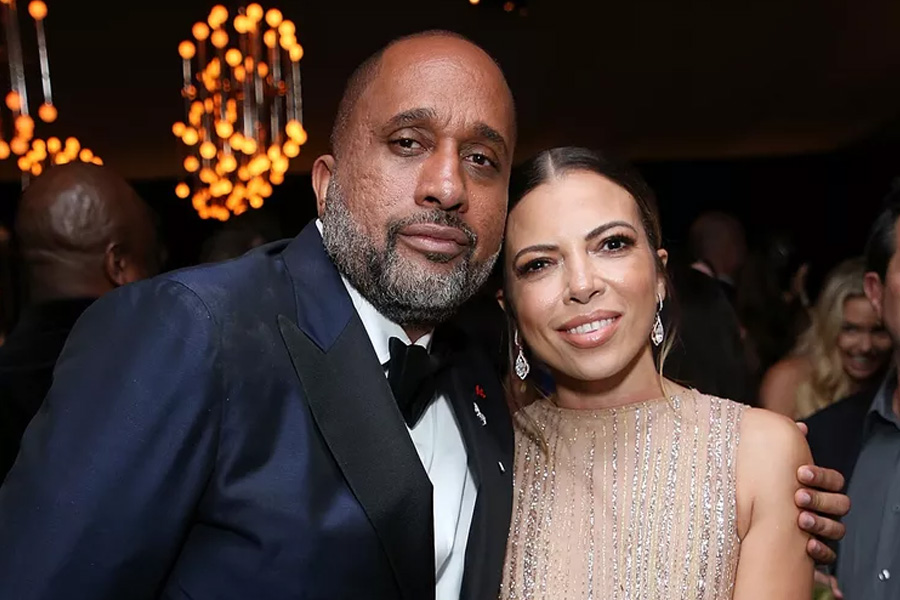
A short portrait
Rania “Rainbow” Edwards-Barris stands at the confluence of two demanding worlds: medicine and modern family storytelling. She is a physician — trained and practiced as an anesthesiologist — an author who translated household texture into a parenting guide, and the real-life inspiration for a widely recognized television character. Her public image is compact but layered: clinician by training, parent by devotion, and cultural touchstone by association. Briefly put, her life reads like a set of overlapping scripts — rigorous, improvisational, and full of small, decisive moments.
Basic information
| Field | Fact |
|---|---|
| Full name (public) | Rania “Rainbow” Edwards-Barris |
| Profession | Physician — Anesthesiologist |
| Notable publication | Keeping Up With the Johnsons: Bow’s Guide to Black-ish Parenting (2018) |
| Public connection | Widely cited as the inspiration for “Bow” (Rainbow Johnson) on black-ish |
| Marital status (public reports) | Married to Kenya Barris (married c. 1999–2000; public separation and legal filings in later years) |
| Children | Parents to 6 children (publicly reported) |
| Family background | Middle of five children; first in immediate family to attend college |
Career and craft
Medicine is a discipline of precision. Rainbow’s professional identity as an anesthesiologist suggests an aptitude for quiet control amid pressure — a steady hand in the room where seconds matter. She trained and practiced in a field where preparation and presence are not optional. That same steadiness slices through her public life: the decision to write, the choice to frame parenting lessons around a fictionalized mirror, the ability to speak about intimate family patterns on a public stage.
Her 2018 book translated private domestic rhythms into a public handbook. The book’s premise — a parenting guide filtered through the persona that inspired a television character — is a pragmatic blend of memoir, advice, and cultural commentary. It demonstrates a knack for shaping personal narrative into a format that other families can read like a map: familiar landmarks, clear signposts, and occasional detours that teach as they entertain.
Family and private life
Family occupies the center of Rainbow’s public story. Married to a writer and television creator whose work draws heavily on family dynamics, her role as partner and parent has been both private labor and a public reference point. Reports note the couple’s long partnership beginning around 1999–2000 and evolving through complex phases over time. Public filings and media accounts record separation and legal proceedings at several points, reflecting the real-life ebb and flow behind stories that often end up on screen.
| Family member | Publicly reported detail |
|---|---|
| Spouse | Kenya Barris — television writer/producer; collaborative and narrative ties to family life |
| Children | Six children (counts and general family activities are publicly discussed; individual minors are not detailed here) |
| Extended family | Rainbow described as middle child of five; first in immediate family to attend college |
The Barris household — a busy house, a working household, six children — is often described as the creative well from which a great deal of storytelling draws. Children are the loud, unscripted background music of the family’s life: they shape decision-making, puncture pretension, and provide raw material for both intimate essays and public shows.
Timeline of public moments
| Year / Approx. | Event |
|---|---|
| c. 1999–2000 | Marriage to Kenya Barris (publicly reported) |
| 2014 | Public legal filings and reported marital difficulties (filed and later withdrawn) |
| 2018 | Publication of Keeping Up With the Johnsons: Bow’s Guide to Black-ish Parenting |
| 2019 | Additional public filing reports and subsequent reconciliation reporting |
| June 2022 | Reported divorce filing by Kenya Barris (public coverage noted) |
These dates trace a personal arc that intersects with public life. Numbers — six children, five siblings, multiple filings across roughly a decade — translate emotional complexity into an observable rhythm. The rhythm is not a tidy metronome; it is more like a family soundtrack with recurring motifs.
Public presence and persona
Rainbow’s public persona is economical. She appears in interviews, podcasts, and book promotions; she posts on public social channels under a handle that identifies her by profession and family role. When she speaks, she balances medical rigor with domestic warmth. Her voice — in interviews and in print — tends to be candid, anchored in experience but attentive to privacy where children are concerned.
Her association with a major television series turns private life into a cultural reference point. The creative loop — a family’s life inspiring a show, the show reflecting back variations of that life, and the real family engaging with the cultural product — makes Rainbow both a subject and a steward of a story larger than any single household. She occupies that loop without turning herself into a spectacle.
Numbers that matter
- 6 — the number of children reported publicly in the family.
- 5 — Rainbow’s position among her siblings (middle child in a blended family of five).
- 2018 — publication year of her parenting book.
- c. 1999–2000 — commonly reported year range for marriage to Kenya Barris.
- 2014, 2019, 2022 — years when public filings or reports about marital status appeared.
Numbers here do more than count; they mark chapters. They show how private history can be logged in public time, how family arcs register as discrete events on the cultural timeline.
Notes on privacy and public narrative
The thread running through Rainbow’s public story is the careful negotiation between privacy and the public’s appetite for narrative. Her professional credentials place certain boundaries around what she speaks on authoritatively; her role as a parent and spouse places other boundaries around what she reveals. Media attention often focuses on the family as source material for television storytelling, yet the family itself remains partially shielded by choice and by the reasonable limits that protect minors.
She has, by choice and circumstance, become a recognizable figure: not just as a doctor or an author, but as the living template for a character millions watched. That role is a kind of mirror-world influence — quieter than celebrity spectacle, weightier than footnote. It is intimate enough to inform a television script, practical enough to produce a parenting guide, and private enough that basic facts — names, ages of children — remain treated with discretion.
The shape of the story
Imagine a house where the monitors hum softly at the edges of a busy morning, where consent forms and school forms pile up in equal measure. Picture a person who moves from the controlled theater of the operating room into the improvisational theater of family life. That tension — between control and improvisation — is the image that best captures Rainbow Edwards Barris publicly. It is a life of roles: clinician, author, partner, parent, muse. Each role overlaps the next, sometimes harmonizing, sometimes dissonant. The result resembles a score written in short movements: precise, warm, and recognizably human.